As a player who has journeyed through Teyvat for years, I find myself reflecting on the world HoYoverse has built. It's a world brimming with diverse cultures, breathtaking landscapes, and stories that span nations. But as we approach the fiery land of Natlan in 2025, a persistent question burns in the community: why does the playable cast often feel so homogenous, especially when drawing inspiration from cultures rich with people of color? The recent 5.0 leaks have only fueled this fire, revealing a curious detail that has left many of us puzzled and, frankly, disappointed.
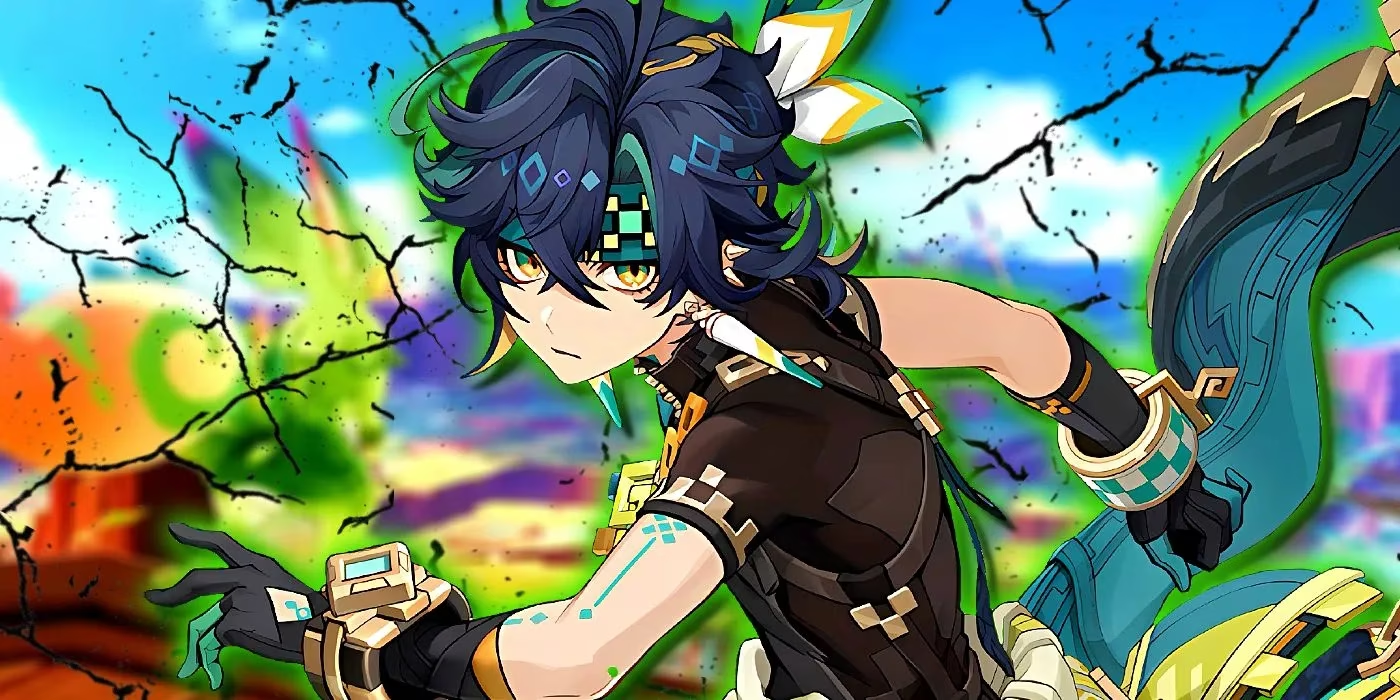
The leak, shared by a source known as Miruko, suggests something intriguing. It claims that a white NPC from Natlan had their skin changed into a darker tone during development. Now, isn't that fascinating? If this is true, it proves a crucial point we've long suspected: HoYoverse absolutely possesses the technical capability to adjust character skin tones within Genshin Impact. The tools are there. The artistry is possible. So, what does it mean when this ability is reportedly applied to a non-playable character but seemingly withheld from the heroes we actually get to control and embody? It feels like a deliberate choice, one that sidelines meaningful representation to the background characters of the world.
This isn't a new conversation. Remember the uproar during Sumeru's release? Players pointed out the disconnect between the region's inspiration and its cast. Now, with Natlan on the horizon, history seems to be repeating itself. Characters like Mualani and Kinich, who draw from cultures historically composed of people of color, have been revealed with notably lighter skin. The community's requests have been clear and consistent:
-
We want characters like Mualani & Kinich to have darker skin tones.
-
We seek authentic representation that honors the cultural roots being referenced.
-
We believe a diverse playable roster makes Teyvat feel more real and inclusive.
HoYoverse is no stranger to creating characters of color. Look at Xinyan, a beloved 4-star character who proudly represents. Even in Honkai: Star Rail, NPCs showcase wonderful racial diversity. Yet, for some reason, this diversity is not fully applied to the playable roster in Genshin Impact. It creates a strange dissonance. We explore worlds inspired by global cultures, but the protagonists leading the charge often don't reflect that world's people. It can make players of color feel like perpetual visitors, never the true heroes of the story.
The company's alleged response—adjusting an NPC's skin tone—feels like a half-measure. It's as if they are taking action to bring wider representation, though through unsatisfactory methods. Does adding a darker-skinned vendor or quest-giver truly address the core issue? Or does it inadvertently reinforce the idea that people of color are supporting characters in this grand narrative? An active boycott is gaining momentum again in 2025, with players hoping their collective voice will finally spur meaningful change. We've seen commotion die down before without the problem being fixed, but this time, the resolve feels stronger.
Of course, we must be cautious. The leak should be taken with a grain of salt. The image's veracity is unconfirmed, and game assets are always subject to change before release. The official 5.0 livestream, slated for later this year, will give us the definitive look at Natlan. Yet, the very existence of this leak and the discussion it sparks is telling. It shows a community that is deeply invested in the soul of the game, not just its combat or exploration.
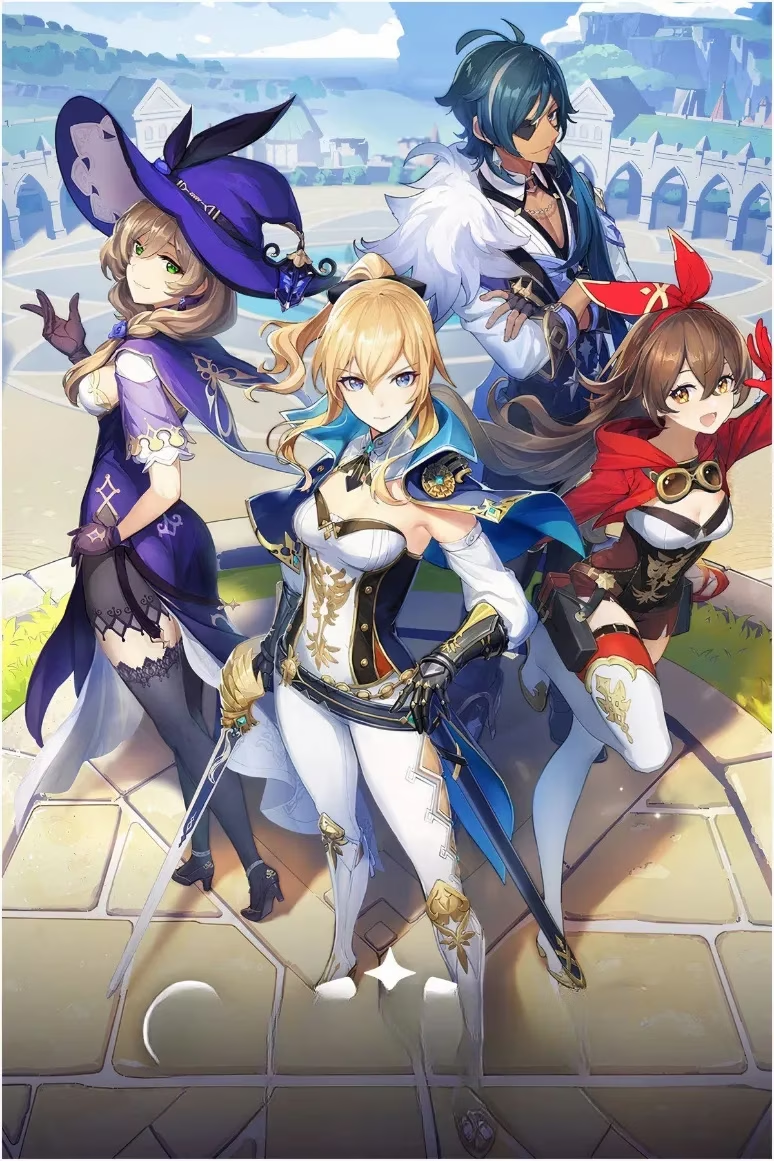
As a player, I love Genshin Impact. I've spent countless hours lost in its beauty. But that love comes with a desire for it to be better—to live up to its own promise of a vast, interconnected world. The Nation of Pyro promises innovations in combat, but will it innovate in its portrayal of humanity? When a game reaches a global audience, shouldn't that audience see themselves reflected in its heroes? The current approach risks making people of color feel like secondary characters, not just in Teyvat, but in the gaming community's perception as a whole.
So, what's next? We wait for the livestream. We analyze the official reveals. And we continue the conversation. Because at the end of the day, this is about more than skin tones; it's about respect, authenticity, and the power of representation in the stories we play. HoYoverse has built a masterpiece. Now, in 2025, it's time to ensure every player feels they have a true place in it.
Comments