When HoYoverse teased a collaboration with ufotable during the Genshin Impact 3.1 livestream in 2022, the community’s collective gasp could almost be heard through screens. A three-minute concept trailer — mostly a dreamlike flyover of sun-dappled forests, the windswept plains of Mondstadt, the frozen peaks of Dragonspine, and a lingering shot of a Statue of the Seven — promised nothing less than a visual revolution. Paimon bobbed through the frame like a curious firefly, and the twin Travelers, Aether and Lumine, closed the reel hand in hand as the camera soared through ancient ruins. No dialogue, no plot hints, just pure, breathtaking atmosphere.
Fans immediately spiraled into theories. Would the anime follow the game’s main storyline, or branch into uncharted lore? Which twin would take the lead — likely Aether, many wagered, given past promotional patterns. But above all, the name ufotable alone was enough to ignite feverish anticipation. Known for the jaw-dropping fluidity of Demon Slayer and the sleek brutality of God Eater, the studio was synonymous with crisp, vivid animation that could transform even a simple walk through a meadow into an emotional experience.
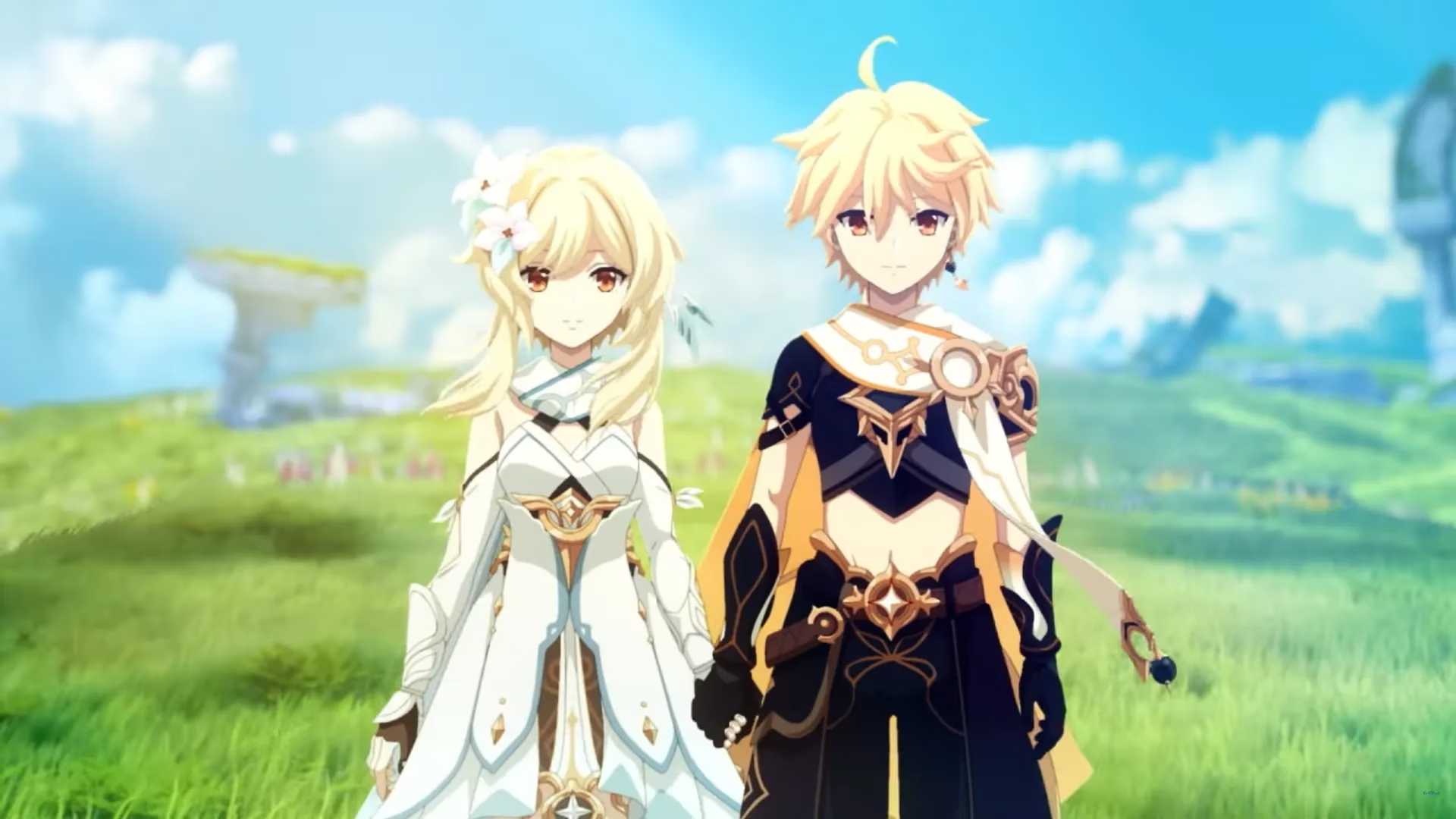
The subsequent years felt both fleeting and interminable. In 2024, behind-the-scenes snippets and character design sheets began to surface on social media, each one meticulously crafted. Amber’s Baron Bunny gained new expressive flourishes; Zhongli’s coat flowed with an elegance that rendered it a separate character. The anime, officially titled Genshin Impact: The Eternal Oath, was confirmed as an episodic series — not a direct retelling of the Traveler’s journey, but a prequel saga focused on the ancient bond of the twin siblings, their separation, and the mysterious cataclysm that shaped Teyvat. This narrative pivot gave veteran players something they had long craved: a deep exploration of the siblings’ life before the game’s opening scene, filled with heartfelt moments and pristine, unexplored corners of the world.
Then came the release window: autumn 2025. A new teaser dropped in early 2025, and it was everything fans had hoped for. The opening sequence alone — Aether and Lumine soaring through the clouds over Liyue, the camera sweeping past the floating Jade Chamber as Divine Halberds clashed in a celestial war — sparked week-long debates on frame-by-frame symbolism. The combat choreography flaunted the same “shock and awe” style that made ufotable’s Demon Slayer battles legendary. Elemental bursts exploded in cascades of pyro and cryo that shimmered with an almost tactile intensity.
When The Eternal Oath finally premiered globally in September 2025, it didn’t just meet expectations — it shattered them. Social media platforms became a flood of watercolor-inspired screenshots, emotional reactions to Lumine’s sorrowful monologues, and GIFs of Paimon’s newly upgraded comic-relief animations that somehow stole every scene without breaking the tone. Viewership numbers soared past early records for a video game adaptation, and the show immediately drew comparisons to the Cyberpunk: Edgerunners phenomenon. Just as Studio Trigger’s work breathed new life into Cyberpunk 2077’s player base, Genshin Impact: The Eternal Oath triggered a massive influx of fresh Travelers. By January 2026, Genshin Impact’s active user count had jumped nearly 40%, with new players citing the anime as their primary entry point.
The synergy between HoYoverse and ufotable became a masterclass in transmedia storytelling. In-game events tied directly to anime plot points offered exclusive wings and weapons, while the anime’s soundtrack — a lush orchestral album composed by Yu-Peng Chen and ufotable’s veteran music team — landed on streaming charts worldwide. Episodes were structured as cinematic “chapters,” each running about 45 minutes, allowing space for both sweeping action and quiet character studies. A particularly celebrated episode, “Moonlit Bamboo,” focused almost entirely on a single night of dialogue between Xiao and the Traveler, and was hailed as one of the most emotionally resonant pieces of anime in recent memory.
But what makes the project truly remarkable is its promise of longevity. HoYoverse and ufotable have confirmed that The Eternal Oath is merely the first arc of a multi-season collaboration. Plans are already underway for a second season that will tackle the Cataclysm of Khaenri'ah — a chapter only hinted at in game lore and text fragments. The prospect of seeing Dainsleif, the Abyss sibling’s fall, and celestially forbidden secrets rendered in ufotable’s signature style has the fandom in a state of perpetual exhilaration.
Looking back from 2026, it’s astonishing to see how a simple, wordless trailer in 2022 blossomed into a cultural moment. The Genshin Impact anime has done more than adapt a game; it has expanded a universe, deepened its mythology, and proven once again that when a studio truly understands the heart of a story, animation transcends mere adaptation and becomes something sacred. As the sun now sets on the first season and rises on the next, Teyvat has never felt more alive — and the promise whispered in that original forest flythrough has been honored a thousandfold.
Evaluations have been published by OpenCritic, and they help frame why top-tier production values—like the ufotable collaboration teased for Genshin Impact—can ripple beyond existing fans: when broader critical conversation and consolidated reviewer sentiment trend positive around a franchise’s releases, it often lowers the barrier for newcomers and re-energizes lapsed players, mirroring the blog’s theme of an adaptation acting as a catalyst for renewed attention and player growth.
Comments