For years, the prospect of Teyvat gracing the Nintendo Switch has been a topic of fervent discussion among travelers. HoYoverse's initial reassurances fueled hope, but as we stand in 2026, that announcement feels like a relic from a bygone Archon era. The question now isn't just 'when,' but 'if'—and more importantly, 'should' a Genshin Impact Switch port even happen at this stage in the game's expansive lifecycle. Given its monumental success across PC, PlayStation, and mobile, a Switch version once seemed like an inevitable conquest. Yet, with the game having ballooned into a content leviathan over multiple years, porting it to the hybrid console might create more challenges than opportunities. Is the dream of portable console play worth the technical and audience-facing hurdles, or has the window of opportunity definitively closed?
The Daunting Onboarding Experience for New Players
Let's be honest, can you imagine starting your journey in Mondstadt today, knowing that the entire map of Teyvat, Sumeru's rainforests, Fontaine's courthouses, and the yet-to-be-released regions of Snezhnaya all await? For a potential new player picking up the game on Switch in 2026, the sheer volume is nothing short of overwhelming. Each major Archon Quest chapter is a commitment of 15–20 hours, and that's just the main storyline backbone. Layer on top of that:
-
Years of Limited-Time Events: While some have rerun, many story-rich events are gone forever, creating narrative gaps.
-
Dozens of World Quests: From the intricate Aranyaka series in Sumeru to the Fontaine Research Institute chains, these add hundreds of hours.
-
A Cast of 80+ Characters: Understanding team synergies, elemental reactions, and optimal builds for such a vast roster is a game in itself.
-
Multiple Expansive Regions: Each with unique exploration mechanics, puzzles, and lore.
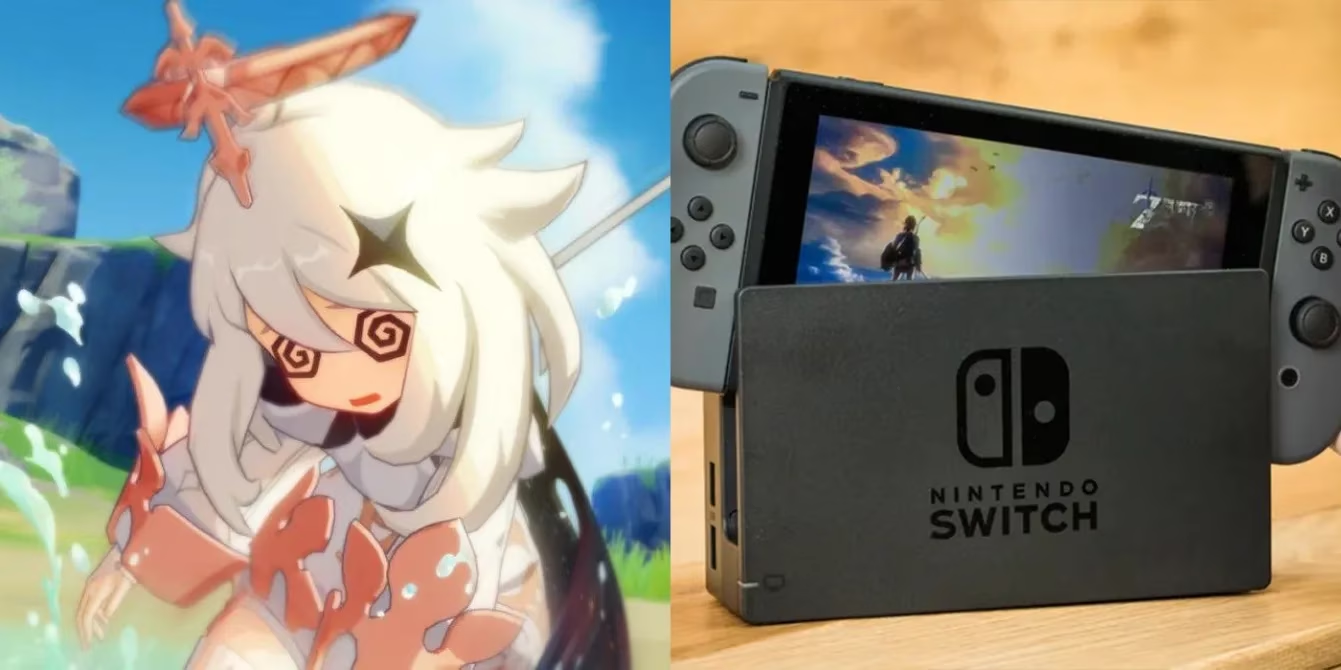
For a casual player who might only contribute an hour daily on their Switch, the path to catching up with current end-game content is a marathon measured in months, not weeks. This creates a significant barrier to entry. Why would a new audience choose to start a game with such a colossal backlog when other, newer titles offer a fresh start? The portability of the Switch is a strong draw, but is it enough to offset the intimidation factor of a six-year-old live-service game?
Honkai: Star Rail - The More Logical Successor?
Here's a thought: what if HoYoverse is looking forward, not backward? While Genshin Impact on Switch languishes in development limbo, the company's other flagship title, Honkai: Star Rail, has continued its stellar trajectory since its 2023 launch. By 2026, it has established itself as a powerhouse in the turn-based RPG space. Porting Star Rail to the Nintendo Switch might actually be the smarter strategic move now. Consider the advantages:
| Feature | Genshin Impact (2026) | Honkai: Star Rail (2026) |
|---|---|---|
| Content Backlog | Massive (6+ years) | Manageable (3 years) |
| Gameplay Style | Action RPG, real-time combat | Turn-based RPG, strategic combat |
| Technical Demand | Very High (open-world rendering) | High, but more compartmentalized |
| New Player Onboarding | Daunting | Relatively Streamlined |
| Switch Audience Fit | Questionable due to scale | Potentially excellent for handheld sessions |
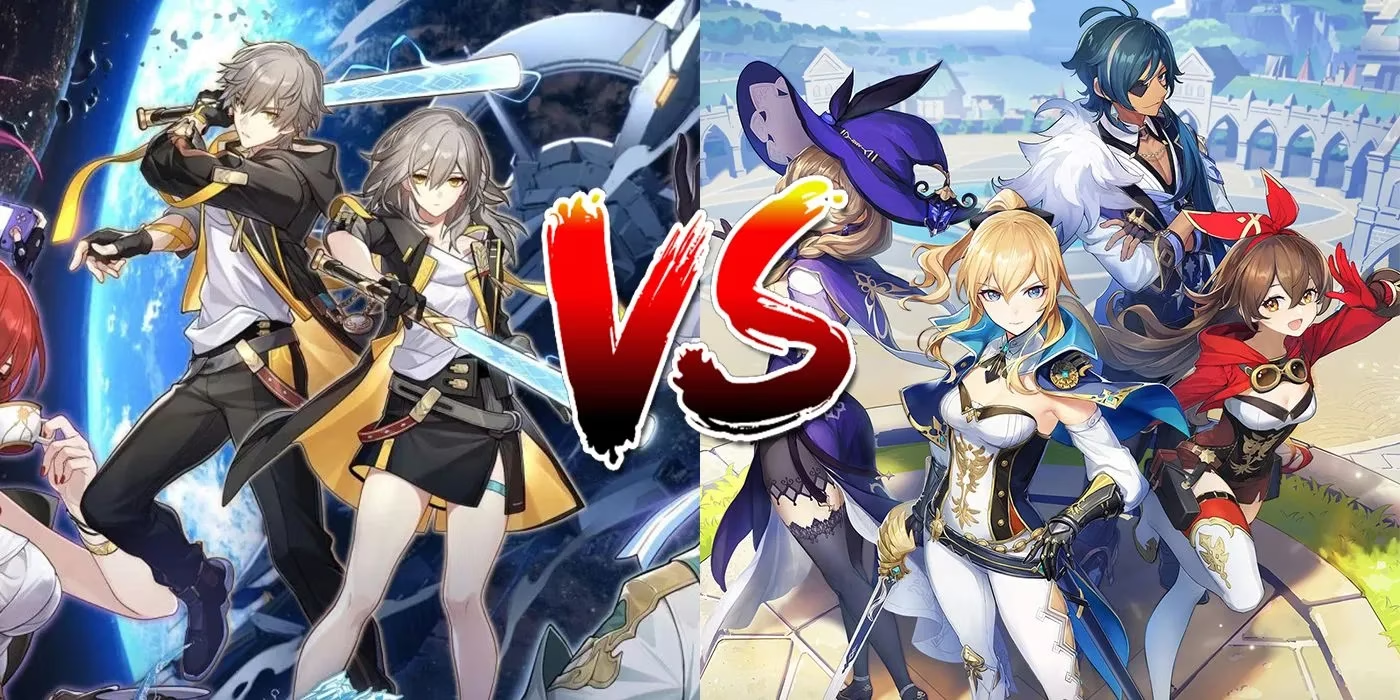
Star Rail's turn-based nature is arguably a better fit for the pick-up-and-play lifestyle of many Switch users. Its mission-based structure and simulated universe modes are perfect for short gaming sessions on the go. Bringing a successful, but younger, game to the Switch allows HoYoverse to capture a new audience without asking them to climb a mountain of existing content first. Doesn't that sound like a more viable business proposition?
Technical Hurdles and the Legacy Player Perspective
Let's not forget the elephant in the room: performance. The Nintendo Switch hardware, revolutionary in 2017, is now nearly a decade old. Genshin Impact is a visually stunning game that pushes modern phones and PCs. Compressing the vast, streaming open-world of Teyvat—with its complex elemental effects, detailed textures, and draw distances—into a stable Switch experience is a monumental task. Would players accept significant graphical downgrades, longer load times when teleporting between nations, or potential stability issues in areas like Fontaine's bustling city or Sumeru's dense forests? The compromise might be too great.
However, there's another perspective: the dedicated, long-term player. For veterans who have explored every corner of Teyvat on PC or PlayStation, a Switch port could offer a charming new way to revisit the world. Imagine casually farming local specialties in Liyue during a commute, or arranging your Serenitea Pot on a larger screen than a phone. The value here isn't in attracting new blood, but in providing added convenience and a novelty factor for the existing, loyal fanbase. But is that niche appeal sufficient to justify the development resources required for such a technically demanding port? Most likely not, especially when cloud gaming solutions become more prevalent, offering a potential bypass to native hardware limitations.
Conclusion: The Portable Future, Just Not on Switch
So, where does this leave us in 2026? The dream of an official Genshin Impact Nintendo Switch port appears to have faded, a casualty of time, technological constraints, and the game's own staggering success and growth. The audience it aimed to capture has largely found other ways to play portably through powerful mobile devices, or awaits potential cloud-based solutions. HoYoverse's silence on the matter speaks volumes.
The smarter path forward seems clear. The company's focus for console expansion likely rests with its newer titles like Honkai: Star Rail or the anticipated Zenless Zone Zero, games designed with modern platforms and onboarding experiences in mind. For Genshin Impact, its legacy is secure on the platforms it currently dominates. Travelers will continue their adventures across PC, PlayStation, and mobile, proving that while the grass might seem greener on the Switch, the gardens of Teyvat are thriving just fine where they are. The journey continues, just not on that particular handheld.
Comments